

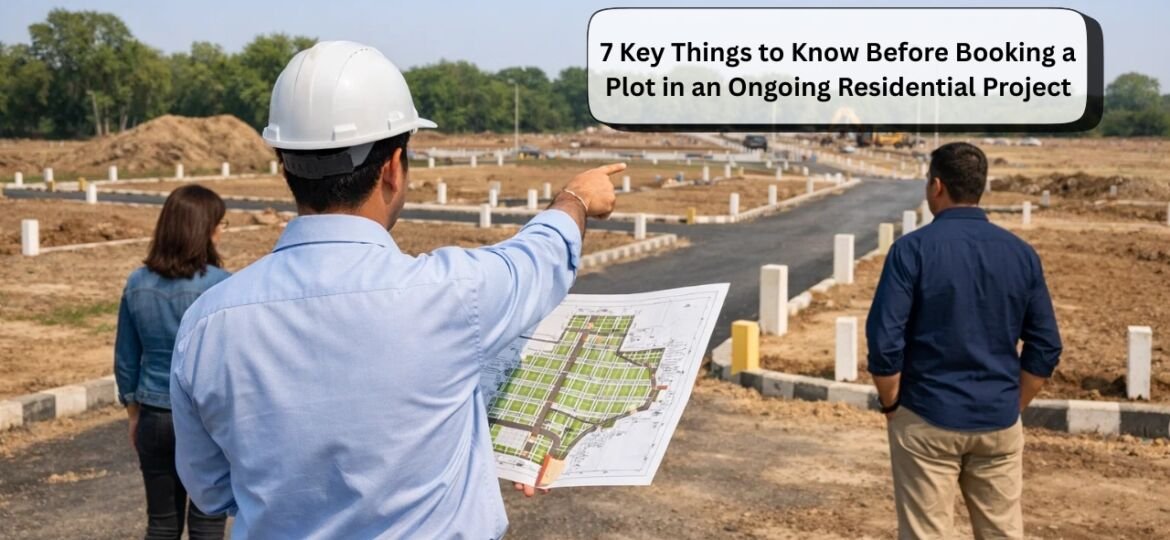
Booking a plot in an ongoing residential project often feels confusing, especially for first-time buyers. Unlike completed developments where everything is visible, ongoing projects involve promises, timelines, and future planning that are still taking shape. Buyers are required to trust layouts, approvals, and progress that may not yet be fully evident on the ground. This uncertainty is exactly what creates fear—what if the development is delayed, infrastructure remains incomplete, or the layout changes later?
Understanding how ongoing residential projects work is critical before making any financial or legal commitment. A well-informed buyer can differentiate between realistic development plans and vague assurances. This guide explains the seven most important things buyers should know before booking a plot in an ongoing residential project, focusing on real-world risks, practical checks, and long-term implications—without promotional language or sales pressure.
1. Project Approval Status & Layout Clarity
One of the most important steps in booking a plot in an ongoing project is verifying approval status. Buyers often assume approvals will be completed “soon,” but assumptions can lead to serious issues later.
A properly approved residential layout ensures:
- Legal recognition of the project
- Defined plot boundaries and road access
- Alignment with local planning norms
Layout clarity is equally important. In ongoing projects, changes sometimes occur during development. Buyers should carefully review approved layout plans and ensure the plot location, road widths, open areas, and amenities are clearly marked. A lack of clarity at this stage can affect future construction permissions and resale value.
2. Development Stage & On-Ground Progress
“Ongoing” can mean very different things. For some projects, basic infrastructure may already be in place. For others, development might have just begun on paper.
Buyers should assess:
- Whether roads are partially or fully developed
- If plot demarcation is visible on site
- The pace of recent development activity
A realistic assessment of on-ground progress helps buyers set correct expectations. Visiting the site more than once, preferably at different times, often provides better insight than relying solely on brochures or discussions.
3. Infrastructure Commitments (Roads, Utilities, Drainage)
Infrastructure is the backbone of long-term livability. In ongoing residential projects, some facilities may exist while others are planned for later phases.
Buyers should clearly understand:
- What infrastructure already exists on site
- What is proposed for future phases
- The sequence in which development will happen
Common misunderstandings arise when buyers assume everything promised will be delivered immediately. Roads, water supply, electricity lines, drainage systems, and street lighting should be discussed in practical terms—not just future intentions. A residential plot buying guide should always emphasise verifying infrastructure readiness.
4. Possession Timeline & Future Development Planning
Timelines matter more in ongoing projects than in completed ones. Buyers often hear tentative possession periods, but without clear planning, these timelines can shift.
Understanding the difference between:
- Verbal commitments
- Documented development schedules
is crucial. Buyers should ask how possession aligns with infrastructure completion. A plot handed over without basic access or utilities can delay construction plans and increase costs. Future development planning—such as additional phases or nearby infrastructure—should also be discussed to understand how daily life may be affected later.
5. Legal Documentation & Transparency
Legal clarity protects buyers from long-term complications. Even in ongoing residential projects, certain documents should be available and transparent.
Buyers should ensure:
- Clear ownership title of the land
- Approved layout documentation
- Transparent agreement terms
It is not necessary to understand every legal clause in detail, but basic clarity is essential. Any hesitation in sharing documents or explaining terms should be treated cautiously. Transparency builds trust and reduces future disputes.
6. Long-Term Livability & Surrounding Development
Booking a plot is not just about ownership—it’s about living there for years. Buyers should consider how the surrounding area will evolve.
Key aspects include:
- Connectivity to daily needs like schools, healthcare, and markets
- Road access to work zones and main transport routes
- Planned development around the project
Well-planned ongoing residential projects usually align with future infrastructure growth. Buyers should think beyond current conditions and evaluate whether the area supports comfortable daily living once construction begins.
7. Builder Credibility & Past Project Execution
The credibility of the developer plays a major role in ongoing projects. Since not everything is complete, past execution becomes an important indicator of future delivery.
Signs of reliability include:
- Timely completion of previous developments
- Consistency between plans and execution
- Clear communication with buyers
While no project is entirely risk-free, a builder’s track record often reflects how responsibly development timelines, infrastructure commitments, and legal processes are handled.
Practical Buyer Checklist for Ongoing Residential Projects
Questions Buyers Should Ask Before Booking
- What approvals are already in place?
- What infrastructure is completed vs planned?
- How is possession defined in the agreement?
- What future development is expected nearby?
Things to Physically Verify at the Site
- Plot demarcation and access roads
- Drainage slopes and water outlets
- Road width and internal connectivity
- On-ground construction activity
Common Mistakes Buyers Make
- Trusting verbal promises without documentation
- Ignoring development stage differences
- Overlooking future livability factors
- Rushing decisions due to limited availability
A well-structured plot booking checklist reduces emotional decision-making and improves confidence.
Conclusion
Booking a plot in an ongoing residential project requires patience, clarity, and informed judgment. Understanding approval status, development progress, infrastructure readiness, timelines, legal transparency, surrounding growth, and builder credibility helps buyers reduce uncertainty and avoid long-term regret.
Rather than focusing only on price or early availability, buyers should evaluate how these seven factors come together to support safe ownership and future construction plans. A thoughtful, checklist-driven approach allows buyers to make confident decisions while navigating ongoing residential projects with clarity, realism, and peace of mind.
If you are planning to book a plot in an ongoing residential project, reviewing how these factors come together in a real development can help you make a more confident decision. KG Construction & Developers is currently developing KG Paradise IV, an ongoing residential project where layout planning, infrastructure progress, and long-term livability are being developed in stages. Exploring the project details can help clarify planning, development status, and future readiness. For more information on plot options, layout details, or current development progress, connect with us to gain better clarity before taking the next step.