

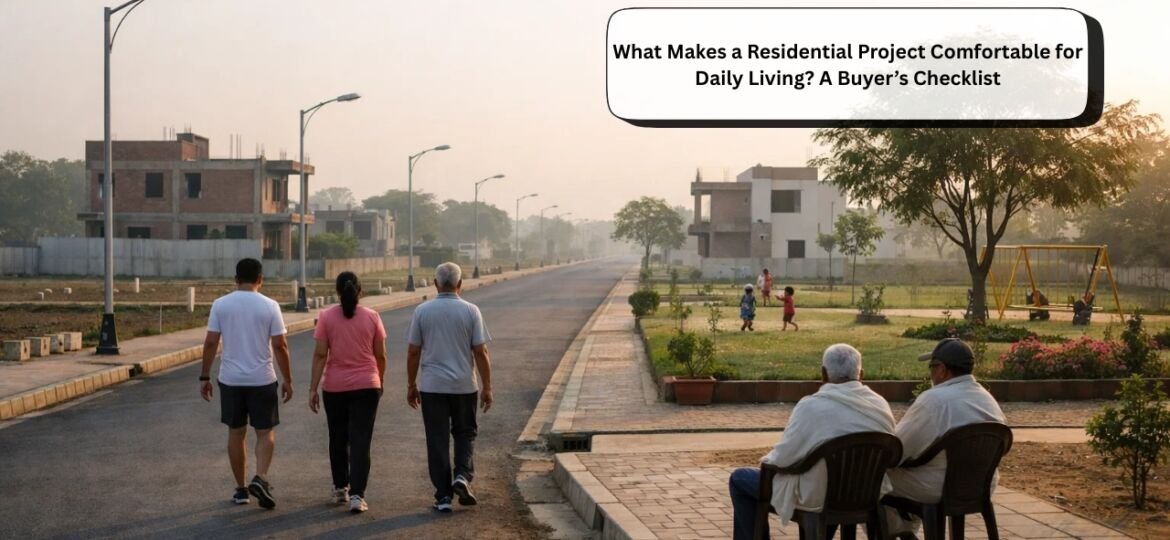
When people think about buying a home, the first questions often revolve around price, location, and size. While these factors are important, they don’t always define how comfortable life will feel once you actually start living there. Daily living comfort goes beyond square feet and pin codes—it’s about how smoothly your everyday routines fit into the space around you. From morning school runs and work commutes to evening walks, safety, and peace at night, a residential project quietly shapes your lifestyle every single day.
Many buyers realise this only after moving in, when small design flaws or planning gaps begin to affect convenience and mental well-being. That’s why evaluating residential project comfort before buying is crucial. This guide breaks down the practical elements that truly matter for daily living in residential projects, helping buyers make informed, long-term decisions—without marketing noise or sales pressure.
📍 Location Convenience for Everyday Needs
Work Commute and Daily Travel
A comfortable residential project supports your daily movement rather than complicating it. Long, stressful commutes can drain time and energy, even if the home itself looks perfect. Buyers should assess how easily the location connects to major work zones, business areas, and public transport routes. A project that reduces daily travel fatigue often improves overall quality of life far more than buyers expect.
Schools, Hospitals, and Daily Markets
Comfortable housing for families depends heavily on access to essential services. Nearby schools, healthcare facilities, grocery stores, and pharmacies reduce dependency on long drives and emergency stress. Even if these facilities are not immediately next door, predictable and safe access routes matter for daily living comfort.
Peace vs Accessibility Balance
Some buyers prefer quiet surroundings, while others prioritise connectivity. The ideal residential project maintains a balance—offering peaceful living without feeling isolated. Projects located just off main roads often provide this balance, keeping noise levels low while ensuring accessibility remains intact.
🛣️ Road Width, Internal Planning & Connectivity
Why Wide Internal Roads Matter
Internal roads are often overlooked during site visits, yet they directly impact everyday comfort. Wider internal roads allow smooth vehicle movement, safer pedestrian walking, and easier access for emergency services. Congested internal layouts can feel restrictive and stressful over time.
Smooth Movement, Safety, and Future Traffic
A well-planned residential layout anticipates future traffic growth. As families grow and vehicle ownership increases, narrow roads quickly become problematic. Planned residential layouts with proper road hierarchy support long-term livability and reduce daily friction between residents.
🌳 Open Spaces, Green Areas & Natural Light
Impact on Mental Health and Lifestyle
Access to green spaces significantly improves daily living in residential projects. Open areas encourage walking, relaxation, and social interaction, all of which contribute to mental well-being. Homes with sufficient natural light and ventilation feel healthier and more comfortable throughout the year.
Children, Elderly, and Family Usage
For families, open spaces are not luxuries—they are functional necessities. Children need safe outdoor play areas, while elderly residents benefit from calm walking paths and seating spaces. A residential project comfort checklist should always include evaluating how these spaces are designed and maintained.
📐 Layout Planning & Plot Arrangement
Planned Layouts vs Random Plotting
The difference between planned and unplanned residential layouts becomes clear over time. Planned layouts ensure consistent spacing, proper orientation, and logical movement patterns. Random plotting may look fine initially but often leads to congestion, privacy issues, and poor light distribution later.
Long-Term Usability Benefits
Good layout planning supports adaptability. Whether it’s parking needs, visitor movement, or future construction around the home, structured layouts make daily living smoother and less disruptive in the long run.
🚰 Basic Infrastructure & Utilities
Water Supply Reliability
A comfortable residential project must have a dependable water supply system. Buyers should understand water sources, storage planning, and distribution methods. Inconsistent water access can quickly turn a good home into a daily challenge.
Electricity and Power Planning
Stable electricity infrastructure, including proper load planning and street lighting, directly affects safety and convenience. Frequent power issues or poorly lit internal roads can compromise comfort and peace of mind.
Drainage and Street Lighting
Effective drainage prevents waterlogging during monsoons and protects road quality. Street lighting enhances visibility and safety, especially for families returning home after dark. These basics form the backbone of residential project comfort.
🔐 Safety, Privacy & Peaceful Environment
Residential Security Aspects
Comfort is closely tied to feeling secure. Gated access, boundary planning, and thoughtful entry-exit design contribute to a sense of safety without feeling restrictive. Buyers should observe how security is integrated into the project layout.
Noise Control and Privacy
Noise from traffic, commercial zones, or overcrowded internal areas can disrupt daily life. Adequate spacing between homes, thoughtful road placement, and zoning separation help maintain a peaceful environment.
Family Comfort and Emotional Well-Being
A calm residential environment supports better sleep, family interactions, and overall happiness. These subtle comforts often matter more than visible features when living in a home long-term.
📈 Future Growth & Long-Term Living Comfort
Infrastructure Development Around the Project
Residential project comfort is not static—it evolves with its surroundings. Buyers should consider upcoming infrastructure developments such as roads, utilities, and civic amenities. Planned growth often enhances livability when aligned with residential planning.
Why Future Planning Matters for Daily Life
Projects designed with future expansion in mind tend to age better. Whether it’s accommodating increased traffic, evolving family needs, or community facilities, forward-looking planning ensures comfort doesn’t decline over time.
✅ Practical Buyer Checklist for Daily Living Comfort
What Buyers Should Physically Check on Site
- Internal road width and surface quality
- Availability and usability of open spaces
- Natural light and ventilation orientation
- Drainage slopes and water outlets
- Street lighting coverage at night
Questions Buyers Should Ask Developers
- How is water sourced and managed year-round?
- What provisions exist for future infrastructure upgrades?
- How is internal traffic and parking planned?
- What measures ensure safety and privacy for residents?
Common Comfort-Related Mistakes to Avoid
- Choosing based only on price or appearance
- Ignoring long-term usability of layouts
- Overlooking basic infrastructure quality
- Assuming future development will automatically improve comfort
Conclusion
A home should support daily life, not complicate it. Comfortable daily living in residential projects comes from thoughtful planning, reliable infrastructure, and environments that respect both convenience and peace. Buyers who focus only on cost or location often miss these essential elements, leading to compromises later.
By evaluating residential project comfort through practical, experience-based factors—such as layout planning, open spaces, utilities, and future readiness—homebuyers can make decisions that truly enhance their quality of life. Taking the time to assess comfort today leads to long-term satisfaction, stability, and peace of mind for years to come.
If you are considering a residential project designed around everyday comfort, practical planning, and long-term livability, Paradise IV by KG Construction and Developers is worth exploring. With its focus on organised layouts, essential infrastructure, open spaces, and future-ready development, the project offers valuable insights for homebuyers who want a balanced and comfortable living experience.
To understand the project details better or clarify any questions related to planning, layout, or availability, feel free to contact us for more information.