

A Complete Guide to Choosing the Right Plot Size & Shape
Everything you need to know about plot measurements, shapes, and how they affect your investment
15 min read
Comprehensive Guide
Introduction: Why Plot Dimensions Matter
Plot dimensions (size and shape) are among the most important factors that affect:
How much does the property cost
What you can build on it
How easy it is to sell later
Your investment’s future value
Many first-time buyers make mistakes because they don’t understand plot dimensions. They end up buying properties that don’t fit their needs or that are difficult to resell. This guide will help you avoid those mistakes.
What Are Plot Dimensions?
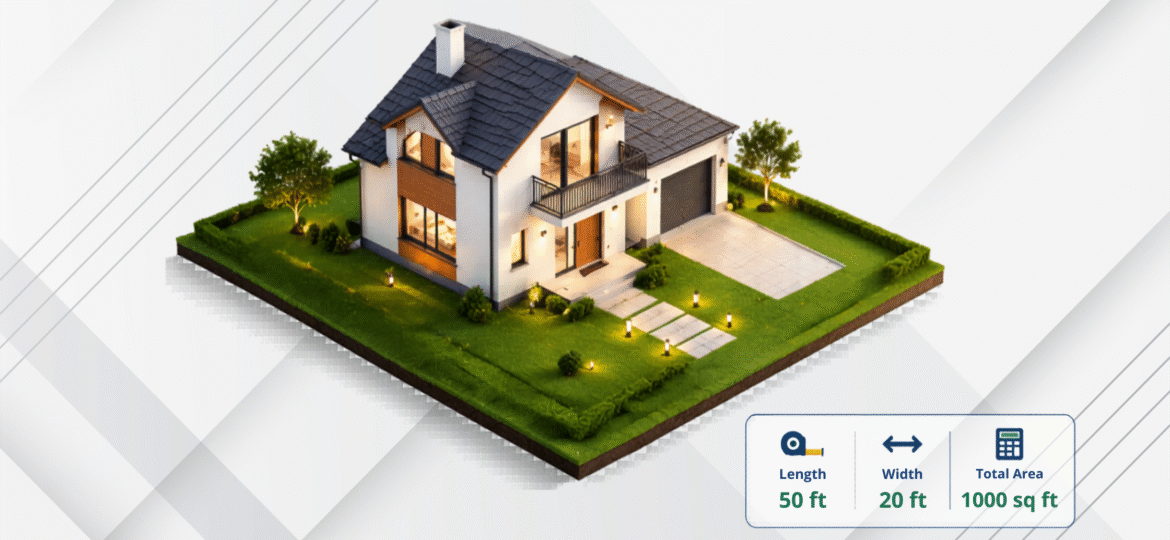
Simply put, plot dimensions are the measurements of your land – how long it is and how wide it is. When these are multiplied together, you get the total area in square feet or square meters.
Example Calculation
If a plot is 50 feet long and 20 feet wide: 50 × 20 = 1,000 square feet
That’s the plot dimension – a simple multiplication!
Understanding Common Measurement Units
Different places use different units. Here’s what you need to know:
📏 Square Feet (sq ft)
- Most common in India
- 1 square foot = 0.092 square meters
- Easier to understand for average buyers
📐 Square Meters (sq m)
- Used internationally
- 1 square meter = 10.76 square feet
- Used more in official documents
🌾 Bigha/Hectare
- Used in some areas
- 1 Hectare = 10,000 square meters = 107,639 square feet
- Common in agricultural areas
⚡ Quick Conversion Tips:
To convert square feet to square meters: Divide by 10.76
To convert square meters to square feet: Multiply by 10.76
Common Plot Sizes Explained
Let’s understand what different plot sizes mean in real terms:
Square Feet – Very Small
Dimensions: 25 ft × 10 ft (or similar)
Good for: Small commercial spaces, kiosks
Note: Not suitable for residential homes
Square Feet – Small
Dimensions: 25 ft × 20 ft (or similar)
Good for: Small houses, first-time buyers with budget constraints
Building space: About 1 room + kitchen + bathroom
Square Feet – Medium
Dimensions: 50 ft × 20 ft (or similar)
Good for: a 2-3 room house with a garden
Note: Most popular size for middle-class families
Building space: 2-3 bedrooms + living area
Square Feet – Large
Dimensions: 100 ft × 20 ft (or similar)
Good for: 3-4 bedroom house with good open space
Suitable for: Villas
Square Feet – Extra Large
Dimensions: 100 ft × 50 ft (or similar)
Good for: Multi-story buildings, bungalows
Suitable for: Commercial use
Understanding Plot Shape
Not all plots are rectangles! The shape affects usability and value.
✓ Rectangular Plots (Most Valuable)
- Length is roughly 2-3 times the width
- Easy to build on
- Good for resale
- Higher demand = higher value
- Example: A 100 ft × 30 ft plot is rectangular and highly marketable.
✓ Square Plots (Good)
- Length = Width (approximately)
- Very usable for construction
- Good for resale
- Example: 50 ft × 50 ft
⚠ Irregularly Shaped Plots (Lower Value)
- Odd angles or shapes
- Difficult to build on
- Less marketable
- Lower resale value
- Price Impact: May cost 10-20% less than regular plots
⭐ Corner Plots (Premium Value)
- At the corner of two roads
- Extra visibility and access from two sides
- Command 15-25% higher price than regular plots
- Better for commercial use
- Higher demand
Dimensions You Should Always Check
Before buying any plot, ask for and verify these measurements:
1. Length and Width
- Get exact measurements from the property dealer
- Don’t rely on “approximately.”
- Ask for a map or survey document
2. Total Area
- Should be calculated by multiplying length × width
- Always verify the math yourself
- Check if the area matches the official documents
3. Road Frontage
- Which side faces the road?
- Is it a main road or a side road?
- The width of the road facing your plot matters
4. Set-Back Requirements
- How much distance must you maintain from the road?
- Set-back rules vary by area
- This affects how much you can actually build
5. Depth of the Plot
- How far does the plot extend behind the front?
- Matters for utility connections (water, electricity)
Important Example:
If a plot is 1,000 sq ft but has a 20 ft setback requirement, you lose precious building space.
How Plot Dimensions Affect Construction
Here’s what you can realistically build on different plot sizes:
500 sq ft plot:
Maximum built-up area: 250-300 sq ft (after setbacks)
Can build: 1-2 small rooms
Note: Not suitable for modern family homes
1,000 sq ft plot:
Maximum built-up area: 600-700 sq ft (after setbacks)
Can build: 2-3 bedrooms
⭐ Most popular and practical size
2,000 sq ft plot:
Maximum built-up area: 1,200-1,400 sq ft
Can build: 3-4 bedrooms + large living area
Allows for: Car parking and a garden
Important: Floor Area Ratio (FAR)
This is a regulation that affects how much you can build.
What is FAR?
It’s the ratio of built-up area to total plot area. Rules vary by location.
Example: If FAR is 2.0 on a 1,000 sq ft plot:
You can build up to 2,000 sq ft (1,000 × 2.0)
This could be:
- 4 floors of 500 sq ft each, OR
- 3 floors of 650 sq ft each, OR
- 2 floors of 1,000 sq ft each
Why it matters: Higher FAR = more building space = higher property value. You must check the FAR rules before buying a plot.
Mistakes Buyers Make with Plot Dimensions
Mistake #1: Not Calculating Real Building Space
Many buyers forget to subtract setback space. A 1,000 sq ft plot doesn’t mean you get 1,000 sq ft to build!
Mistake #2: Ignoring Plot Shape
They buy irregular plots thinking they’re getting space, but can’t use it effectively.
Mistake #3: Not Checking Official Survey Documents
Some plots have different dimensions on paper vs actual ground. Always verify!
Mistake #4: Forgetting About Future Needs
Buying a 500 sq ft plot, assuming you’ll upgrade later. Markets change – choose wisely the first time.
Mistake #5: Not Understanding Local Regulations
Set-back rules, FAR, and building restrictions vary. Know them before buying.
How to Verify Plot Dimensions Yourself
Step 1: Get Official Documents
- Ask the property broker for the survey document
- Check registration papers
- Verify dimensions match on all documents
Step 2: Ask for a Plot Map
- Request a map showing length, width, and angles
- Compare it with your understanding
- Ask if any part is not usable (water body, road, etc.)
Step 3: Do a Physical Visit
- Walk the entire perimeter if possible
- Notice the shape and slope
- Check what’s around it
Step 4: Calculate Yourself
- Take the length and width given
- Multiply to get the total area
- Verify this matches what the broker says
Step 5: Check Regulations
- Ask about setback requirements
- Find out the FAR (Floor Area Ratio)
- Know what you can legally build
Questions to Ask Your Property Broker About Plot Dimensions
- “What are the exact dimensions of this plot?”
- “What’s the setback requirement in this area?”
- “What’s the Floor Area Ratio (FAR) allowed?”
- “Is the plot shape regular or irregular?”
- “Can you show me a survey map or official document?”
- “What is the actual usable building area?”
- “Are all dimensions verified by the municipality?”
- “Is this property RERA approved? (if applicable)”
How Plot Size Affects Investment Returns
Smaller Plots (500-1,000 sq ft)
- Lower initial cost
- Easier to find buyers
- Faster resale
- Lower per sq ft price growth
- Good for budget-conscious investors
Medium Plots (1,000-2,000 sq ft)
- Most popular size
- Moderate price
- Good resale potential
- Better appreciation
- Suit’s family investments
Larger Plots (2,000+ sq ft)
- Higher initial cost
- Takes longer to sell
- Better per sq ft appreciation
- Suited for serious developers
- Limited buyer base
Understanding Market Price Based on Dimensions
Property prices are usually quoted as “price per square foot.”
Example: If an area’s average price is ₹500 per sq ft:
500 sq ft plot = ₹2.5 lakhs
1,000 sq ft plot = ₹5 lakhs
2,000 sq ft plot = ₹10 lakhs
But remember:
- Corner plots may cost 20% more
- Irregular shapes may cost 10-20% less
- Location within the area matters
- The exact position on the road affects the value
Real Example: How Dimensions Affect Value
📍 Plot A
Dimensions: 50 ft × 20 ft = 1,000 sq ft
Shape: Regular rectangular shape
Location: Regular road frontage
Price: ₹5 lakhs (₹500 per sq ft)
Highly Marketable
📍 Plot B
Dimensions: 70 ft × 14 ft = 980 sq ft (almost the same size!)
Shape: Irregular shape (triangle-ish)
Location: Poor road frontage
Price: ₹4 lakhs (₹408 per sq ft)
Lower Value
The difference? Just shape and location!
This is why understanding dimensions matters.
Common Questions About Plot Dimensions
Q: Is a 100 ft × 10 ft plot better or worse than a 50 ft × 20 ft plot?
A: Both are 1,000 sq ft, but 50×20 is better because it’s more regular and easier to build on. The 100×10 plot is too narrow.
Q: Can I buy a plot smaller than my budget allows?
A: Yes, but consider future needs. Too small = limited building options = harder to resell.
Q: Does the direction of the plot matter?
A: Yes! North-facing plots are generally preferred. East is good. The South and the West can be hotter. This affects value by 5-10%.
Q: What if the actual plot dimensions don’t match the documents?
A: This is a red flag! Don’t buy without resolving this. Have the municipal authorities confirm the correct dimensions.
The Right Plot Dimension for Your Needs
For Budget Buyers: 500-750 sq ft
- Lower cost
- Enough for a small family
- Easy to resell
For Middle-Class Families: 1,000-1,500 sq ft
- Perfect for a 2-3 bedroom house
- Good resale value
- Best investment return potential
For Large Families/Business: 2,000+ sq ft
- More flexibility
- Can build multiple structures
- Longer to sell but better appreciation
For Commercial Use: 500+ sq ft (flexible)
- Location matters more than size
- Check FAR and zoning rules carefully
Key Takeaways
- ✓ Plot dimensions are simple: length × width = total area
- ✓ Shape matters: rectangular > square > irregular
- ✓ Corner plots have 15-25% higher value
- ✓ Always verify dimensions with official documents
- ✓ Understand setback and FAR rules before buying
- ✓ Calculate actual buildable area (not just total area)
- ✓ Check comparable plot sizes in your area
- ✓ Never buy without physical verification
Make Smarter Property Decisions with Expert Guidance
Understanding plot dimensions helps you make smart investment decisions. But it can be confusing if you’re doing it alone!
Why choose KG Construction & Developers?
- ✓ Explain plot dimensions clearly in simple terms
- ✓ Show you comparable plots in your budget
- ✓ Verify all dimensions with official documents
- ✓ Help you understand local building regulations
- ✓ Ensure you get the best value for your money
- ✓ Explain every detail before you invest
- ✓ Provide flexible payment plans
Don’t invest blindly. Make informed decisions with expert guidance.
📞 Call us now to speak with our experts
🌐 Visit our website
We help you find the perfect plot at the right price. Because when you buy smart, you invest better!
Your dream plot is waiting. Let’s find it together with KG Construction and Developers.