

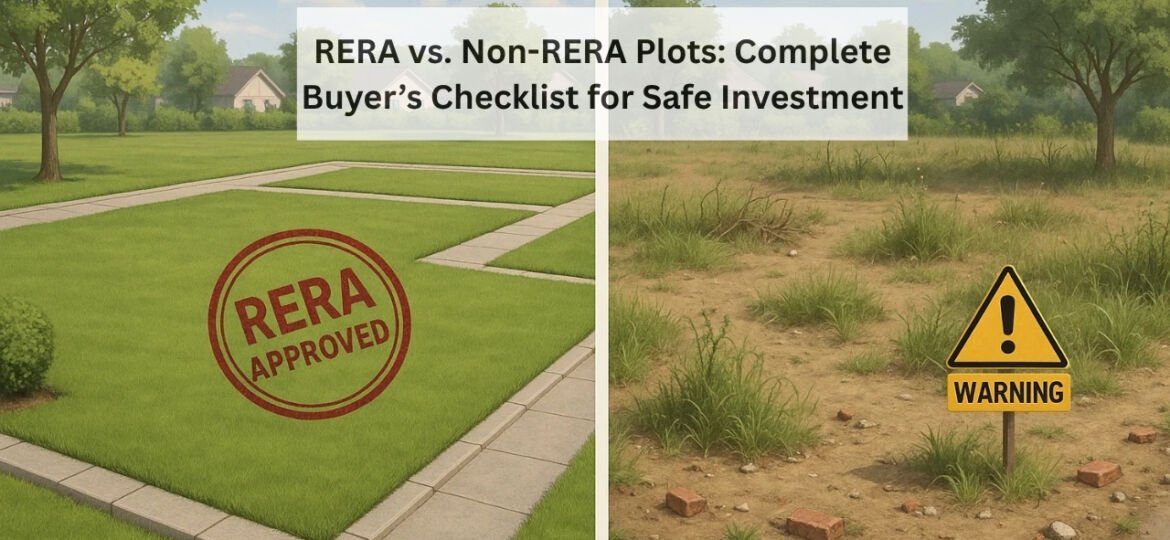
Buying a residential plot in Udaipur is a dream for many families and a smart investment choice for the future. But before you invest, a few important questions always come up—Is the title clear? Are all approvals in place? Will the property give good returns over time? Understanding the difference between RERA vs Non-RERA plots can help you make a safe and confident decision.
To bring more transparency into the real estate sector, the government introduced the Real Estate Regulatory Authority (RERA). It helps buyers by ensuring that projects follow proper rules and approvals. However, many plots—especially in developing areas of Udaipur—are still sold as Non-RERA plots, which may involve certain risks.
In this guide, we’ll break down RERA vs Non-RERA plots in simple terms, explain the key differences, and share a practical checklist to help you choose the right plot in Udaipur.
What is RERA?
The Real Estate Regulatory Authority (RERA) was established under the RERA Act of 2016 to bring accountability and fairness to the real estate sector. It regulates builders, protects buyers, and ensures projects are legally approved.
Benefits of Buying Rera Approved Plots
- Transparency: Builders must disclose project details, approvals, and timelines.
- Legal Protection: Buyers have the right to verified documents and safeguards against fraud.
- Timely Possession: Developers are held accountable for delays.
- Financial Security: Buyers’ money must be used for the registered project, reducing diversion of funds.
- Resale Value: RERA plots generally have higher demand and better appreciation.
In simple terms, buying rera approved plots means your investment is backed by legal safeguards and official oversight.
What Are Non-RERA Plots?
Non-RERA plots are those not registered under the Real Estate Regulatory Authority. These are often agricultural or unconverted lands sold without the necessary approvals.
Risks of Non-RERA Plots
- Unclear ownership or disputed title
- Lack of approvals for land use, zoning, or NA (Non-Agricultural) conversion
- Lower resale potential, as most banks avoid financing such properties
- Legal complications that can take years to resolve
For buyers, Non-RERA plots may appear cheaper initially but can turn into risky, long-term liabilities.
Key Differences Between RERA and Non-RERA Plots
| Factor | RERA Plots | Non-RERA Plots |
|---|---|---|
| Legal Security | Legally protected under RERA Act | Higher risk of disputes and unclear ownership |
| Documentation & Approvals | Verified and uploaded on RERA portal | Often missing NA conversion or municipal approvals |
| Transparency in Pricing | Clear pricing structure, regulated by authority | Prices may vary; hidden costs possible |
| Possession Timelines | Developers accountable for delays | No accountability for possession delays |
| Investment Potential | Higher resale value and loan eligibility | Limited demand; low resale value |
This makes it clear why RERA plots are considered safer investments for families and investors alike.
Complete Buyer’s Checklist for Safe Plot Investment
Before finalizing your dream plot, go through this step-by-step checklist to protect your investment:
1. Verify Title and Ownership
- Check whether the seller has legal ownership rights.
- Ask for the sale deed, mother deed, and encumbrance certificate.
- Confirm NA (Non-Agricultural) conversion for residential use.
- Verify zoning permissions, municipal approvals, and layout sanctions.
3. Confirm RERA Registration (If Applicable)
- Visit the official RERA website for your state.
- Cross-check project details such as approvals, timelines, and builder credentials.
4. Inspect Site and Surrounding Infrastructure
- Personally visit the site to check road access, water, electricity, and drainage.
- Review nearby development projects that can boost future value.
5. Evaluate Investment Potential
- Consider location advantages: proximity to schools, hospitals, highways, and markets.
- Assess the area’s growth potential—planned townships or industrial hubs nearby can increase appreciation.
6. Financial Considerations
- Confirm if banks provide loans for the plot (most avoid Non-RERA plots).
- Ask for a breakdown of all charges to avoid hidden costs like development fees or maintenance.
7. Consult a Legal Expert Before Final Purchase
- Hire a property lawyer to review documents and contracts.
- Ensure the sale deed and registration process are completed legally.
Key Takeaways
When investing in a residential plot in Udaipur, the choice between RERA vs. non-RERA plots plays a crucial role in determining how safe and profitable your investment will be. RERA-approved plots offer better transparency, proper legal documentation, and stronger resale value. On the other hand, Non-RERA plots may seem affordable at first but often come with hidden risks and uncertainties.
By following this buyer’s checklist and verifying all key details in advance, you can avoid common mistakes and invest with confidence. Whether you are planning to build your dream home or looking for long-term returns, choosing a legally approved plot in Udaipur will always be a smarter and more secure decision.
Also Read: 10 Documents Required To Buy Plot In Udaipur
🏡 Secure Your Dream Plot with KG Construction & Developers
Make your investment stress-free with RERA-approved plots backed by clear titles, legal approvals, and complete transparency. At KG Construction & Developers, we don’t just sell plots—we help you build a safe and valuable future. Connect with us today to explore our ongoing plots for sale, all legally compliant and tailored to your needs.
Frequently Asked Questions (FAQs)
- What is a RERA-approved plot?
A RERA-approved plot is a residential land registered under the Real Estate Regulatory Authority (RERA). It ensures verified legal documents, proper approvals, timely possession, and financial security for buyers. - How is a Non-RERA plot different from a RERA-approved plot?
Non-RERA plots are not registered under RERA. They may lack proper approvals, clear titles, and legal safeguards, making them riskier for investment compared to RERA-approved plots. - Why should I buy a RERA-approved plot instead of a Non-RERA plot?
RERA-approved plots provide legal security, verified approvals, transparent pricing, higher resale value, and bank loan eligibility, whereas Non-RERA plots can have disputes, hidden costs, and lower resale potential. - How can I verify if a plot is RERA-approved?
You can verify a plot’s RERA registration by visiting your state’s official RERA website and checking the project details, approvals, and builder credentials. - What legal documents should I check before buying a plot?
Verify the sale deed, mother deed, encumbrance certificate, NA (Non-Agricultural) conversion, municipal approvals, and RERA registration (if applicable) before purchasing a plot. - Are bank loans available for Non-RERA plots?
Most banks avoid providing loans for Non-RERA plots due to legal risks and unclear approvals. Loans are generally easier to get for RERA-approved plots.