

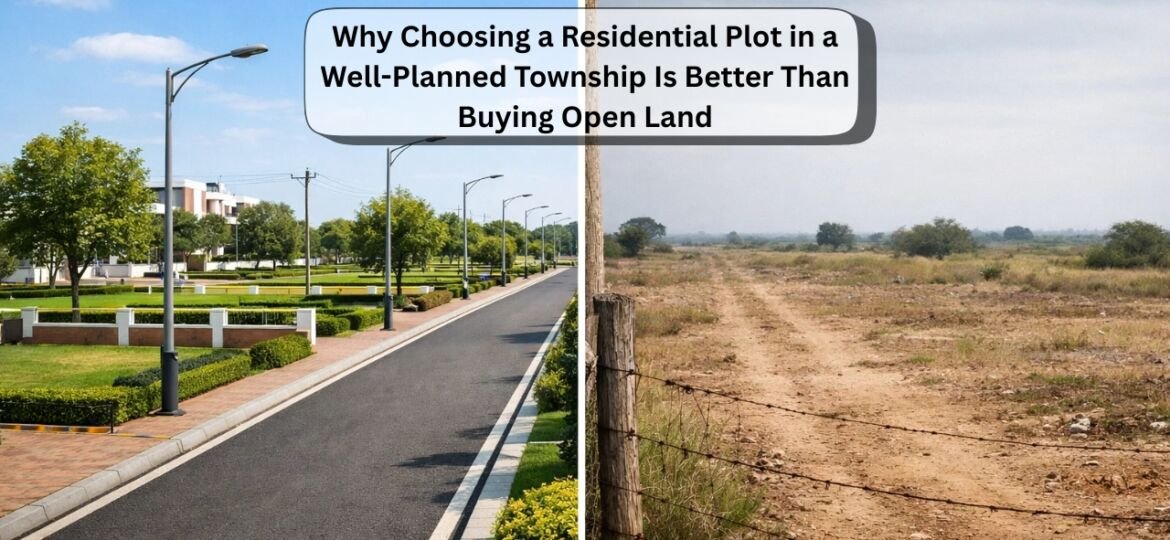
Buying a residential plot is often an emotional and financial decision. Many buyers reach a point where they must choose between a plot inside a well-planned township or a piece of open land that looks affordable and flexible. A well-planned township simply means an area that has been thoughtfully developed with roads, utilities, boundaries, and approvals already in place. Open land, on the other hand, refers to raw land with little or no development or infrastructure.
Imagine a family planning to build their home within the next few years. They visit multiple sites and feel confused—open land seems cheaper, but township plots look more organized and secure. Both options exist, and both attract buyers for different reasons. However, when safety, clarity, and long-term value are considered, township plots usually provide stronger residential plot advantages and peace of mind for buyers looking to make a safe plot purchase.
What Exactly Is a Well-Planned Township?
A well-planned township is a residential development created with proper design, approvals, and future living needs in mind. Every element is arranged to make daily life smooth and predictable for residents.
Such developments typically include properly laid internal roads that allow easy movement of vehicles and pedestrians. Street lights are installed to ensure visibility and safety at night. Water supply lines and electricity connections are planned in advance, avoiding future struggles. Drainage systems are designed to prevent waterlogging and hygiene issues during heavy rains.
Another important feature is clearly demarcated plot boundaries. Buyers know exactly what they own, which avoids disputes later. Many planned township projects also offer gated access or basic security arrangements, adding another layer of safety. Legal approvals are obtained before development, ensuring that the land use is correct and documented.
All these elements together create a safe, organized, and hassle-free living environment. This level of planning significantly reduces stress and uncertainty for buyers.
What Is Open Land and Why Buyers Choose It?
Open land refers to undeveloped or partially developed land without structured planning. There are usually no fixed roads, street lights, or utility connections. Buyers are often responsible for arranging everything from scratch.
Some buyers choose open land because the initial price appears lower. It may also offer flexibility in plot size or location. For experienced investors, open land may seem like an opportunity to save money or customize development.
However, open land often comes with challenges that are not visible during the purchase stage. Boundaries may not be clearly marked, leading to confusion or disputes. Legal conversion and land-use permissions may be pending or unclear. Access roads may not exist, and water or electricity connections may require long waiting periods.
These open land disadvantages often surface only after purchase, turning what seemed like a simple deal into a long-term headache for many buyers.
Detailed Comparison – Township Plot vs Open Land
When comparing township vs open land, the differences become clearer once practical living aspects are considered.
Safety and Security:
Township plots usually offer gated entry, lighting, and defined access points. Open land often lacks security, making it vulnerable to encroachment or misuse.
Legal Transparency:
Planned township developments follow approved layouts and documented land use. Open land may involve unclear titles, conversion delays, or regulatory uncertainty.
Demarcation and Measurement Accuracy:
In a township, plot boundaries are clearly marked and measured. With open land, buyers often face disputes over exact dimensions or access rights.
Infrastructure Availability:
Township plots come with internal roads, drainage, water lines, and electricity access. Open land requires buyers to invest heavily to create basic infrastructure.
Approved Layout and Land Use:
Planned township projects are developed as residential zones. Open land may need additional permissions before construction can begin.
Community Living Environment:
Township living encourages community interaction, shared spaces, and organized surroundings. Open land often develops randomly, with no sense of neighborhood planning.
Resale Value:
Township plot benefits include higher trust among future buyers, leading to better resale demand. Open land resale often involves longer selling cycles.
Construction Readiness:
Building a home is faster in a township due to ready access and approvals. Open land construction can be delayed due to infrastructure and legal issues.
Hidden Development Costs:
Township plots usually have predictable costs. Open land involves unpredictable expenses for leveling, utilities, and legal processes.
Family-Friendly Surroundings:
Townships are designed with families in mind, offering safer roads and organized spaces, making them a more comfortable residential choice.
Why Township Plots Offer Better Long-Term Value
One of the strongest residential plot advantages of a township is long-term value growth. Township plot appreciation is driven by structured development and buyer confidence.
Planned areas attract families who want safety, organized infrastructure, and a peaceful environment. As more families move in, the demand for such plots increases steadily. Development in township areas tends to be faster and more systematic, which encourages supporting infrastructure such as roads, public facilities, and services around the area.
From an investment point of view, township plots are easier to resell because buyers trust planned developments more than raw land. Documentation is clearer, boundaries are defined, and future growth prospects are visible. This makes township plots a preferred option for both end-users and investors.
Over time, the organized nature of a planned township creates a stable and reliable property market, protecting buyers from sudden value drops or uncertainty.
Hidden Costs of Open Land That Buyers Often Overlook
Many buyers focus only on the purchase price of open land and ignore the additional expenses that come later. These hidden costs often make open land more expensive in the long run.
Arranging water and electricity connections can be time-consuming and costly. Drainage systems may need to be built from scratch to avoid flooding issues. Land leveling and soil testing are essential before construction but are often overlooked during purchase.
Boundary walls must be constructed to protect the land, adding further expense. Legal conversion fees and compliance costs may arise if the land is not already approved for residential use.
In contrast, township plots include most of these elements upfront. This reduces financial surprises and makes budgeting easier for buyers looking for a safe plot purchase.
Who Should Prefer Township Plots?
Township plots are ideal for buyers who value clarity, safety, and long-term security. Families planning to build homes prefer townships because the environment is organized and child-friendly.
First-time plot buyers benefit greatly from planned developments because they reduce legal and technical risks. Buyers who want to start construction soon will find township plots more practical due to ready infrastructure.
People who prioritize transparent documentation, predictable costs, and peace of mind should strongly consider planned township options. For such buyers, the structured environment outweighs the temporary savings offered by open land.
Conclusion: Making a Smarter Plot Buying Decision
Choosing between a township plot and open land is not just about price—it is about safety, clarity, and long-term value. While open land may appear affordable initially, it often brings legal, infrastructure, and financial challenges later. Planned township developments offer organized living, better security, and stronger resale potential.
For buyers seeking residential plot advantages, a well-planned township provides a safer, smarter, and more reliable option. Prioritizing planning over uncertainty helps ensure that your investment remains secure and future-ready. Making an informed decision today can protect both your finances and your peace of mind tomorrow.
If you are planning to buy a residential plot and want clarity, safety, and long-term value, choosing a well-planned township is a smarter step. At KG Construction and Developers, residential plot developments are designed with proper approvals, organized layouts, and essential infrastructure to ensure a secure and hassle-free buying experience. Projects like Paradise IV reflect a planned township approach that focuses on legal transparency, structured development, and long-term residential value for buyers.