

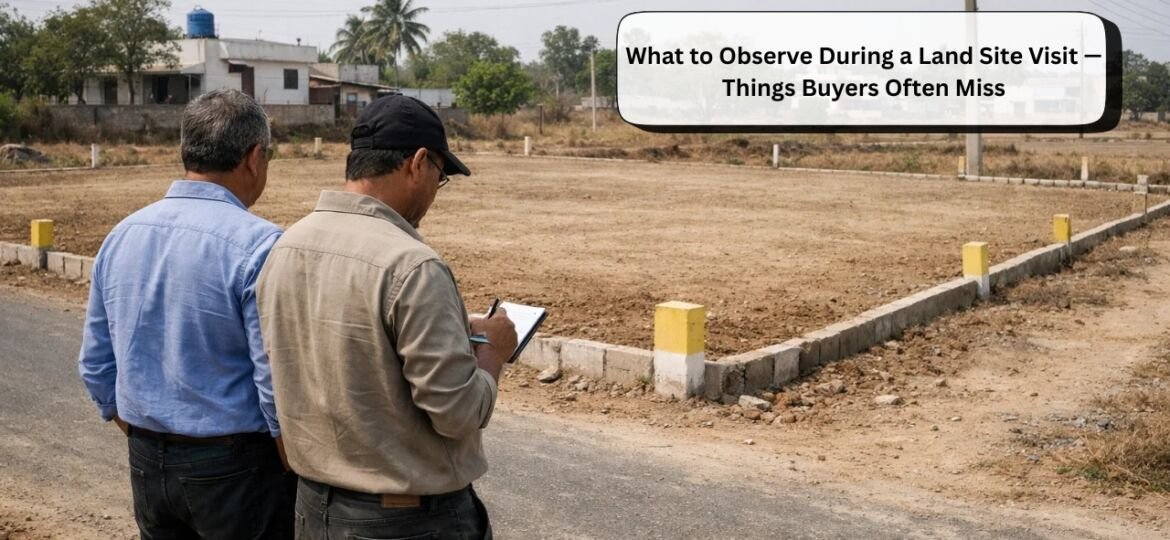
Most land site visits follow a familiar pattern.
The buyer arrives, walks around the plot, looks at the size, checks the road in front, imagines a future home, and feels satisfied. The visit ends quickly, often within 15–20 minutes. On the way back, there is a quiet sense of relief — “The plot looks fine.”
Months later, after construction starts or daily visits increase, doubts begin to surface.
Access feels inconvenient. The surroundings feel uncomfortable. Small problems start adding up.
The truth is, many buyers do visit land physically, but they don’t really observe it.
Site visits are often rushed, emotionally driven, and focused on surface-level comfort. That is why understanding what to check before buying land goes far beyond documents and measurements. The site itself tells a story — but only if you slow down enough to notice it.
Why Most Buyers Rely Too Much on First Impressions
Emotional Decisions Take Over on Site
A land site visit is not a neutral experience. Buyers arrive with expectations, hope, and mental images of a future home. Once the plot looks “good enough,” the mind stops asking deeper questions.
Excitement quietly replaces observation. This buyer behaviour during site visits is natural, but risky.
Visual Appeal Hides Practical Issues
Clean boundaries, an open view, or a freshly cleared plot can give a false sense of readiness. These visual cues often distract from less visible realities like access experience, surrounding activity, or environmental challenges.
Many land buying mistakes happen because buyers trust what looks pleasant instead of what feels practical.
Why Buyers Ignore What Doesn’t Show Immediately
Noise, dust, traffic flow, water movement, and neighbourhood patterns do not announce themselves during a short visit. They require patience and awareness.
When buyers rush, these on-site factors when buying land remain unnoticed — until daily life begins.
What Buyers Commonly Overlook During a Land Site Visit
Access Roads and the Approach Experience
Most buyers only check whether a road exists. Very few observe how it feels to reach the plot.
Ask yourself:
- Is the approach narrow or wide?
- Does the road change condition after rainfall?
- Do heavy vehicles pass through regularly?
The approach experience affects every visit, every delivery, and every emergency. This is one of the most overlooked aspects during a land site visit.
Neighbourhood Activity and Surroundings
Buyers often focus only on the plot boundaries, ignoring what surrounds it.
Observe:
- Are nearby homes occupied or empty?
- Is there ongoing construction noise?
- Are there commercial activities nearby?
The planning and surroundings of land shape daily comfort far more than the plot itself.
Noise, Dust, and Daily Movement Patterns
A site may feel quiet at noon but noisy in the morning or evening. Traffic routes, nearby open areas, or industrial movement may only become active at specific times.
These daily living impact of land location factors are rarely visible in a single visit.
Water Flow, Drainage, and Land Slope
Flat land looks appealing, but how water behaves during rainfall is critical. Buyers often miss:
- Natural water flow paths
- Slight slopes directing water toward the plot
- Signs of water stagnation nearby
Problems after buying land often begin during the first monsoon.
Distance vs Actual Travel Experience
Buyers mentally calculate distance but underestimate travel effort. A location may look “near enough” on paper, but poor connectivity or traffic congestion changes the experience completely.
Evaluating land before purchase means experiencing the journey, not just measuring it.
Safety and Emergency Accessibility
Few buyers consider how easily emergency services can reach the site. Narrow roads, dead ends, or poorly lit approaches become serious concerns later.
Long-term usability of land includes safety, not just space.
Why These Missed Observations Matter After Purchase
Daily Stress Builds Slowly
None of these issues feel dramatic on day one. They show up gradually — extra time lost, small discomforts, repeated adjustments.
Over time, this creates stress that buyers never anticipated.
Unexpected Adjustments and Costs
Poor access, drainage fixes, or boundary protection often require additional effort and coordination. These challenges usually arise after construction begins, when changes are harder to make.
This is why site-visit observations matter more than most buyers realise.
Living Reality Is Different From Buying Emotion
A plot that felt exciting during the visit must function calmly every day. When emotions fade, practicality takes over — and that is when missed details become visible.
What to Check Before Buying Land Beyond Documents and Price
Legal clarity is essential, but it is incomplete on its own.
Understanding what to check before buying land means combining paperwork with physical reality. A clean document does not guarantee comfortable living.
On-ground observation answers questions that paperwork cannot:
- How does the area feel at different times?
- How does movement flow around the plot?
- How does the environment behave naturally?
These land buying decision factors protect buyers from regret more than any clause on paper.
How Buyers Should Approach a Land Site Visit More Thoughtfully
Slow Down the Visit
A meaningful land site visit cannot be rushed. Walk around slowly. Pause. Observe the surroundings, not just the plot.
Visit at Different Times
Morning, evening, or post-rain visits reveal realities that midday visits hide. This single step reduces many land buying mistakes.
Think Like a Resident, Not a Visitor
Ask yourself:
- Would I be comfortable arriving here daily?
- How would my family experience this place?
- Does this location support routine life?
This mindset shift changes how buyers understand what to check before buying land.
Conclusion
A land site visit is not about liking a plot.
It is about understanding how it will feel to live there — every day, in every season.
Most things buyers regret are not hidden in documents or price discussions. They are hidden in plain sight, missed during rushed visits and emotional decisions.
Relearning what to check before buying land means paying attention to on-ground realities: access, surroundings, movement, and comfort. These factors quietly shape daily life long after the purchase excitement fades.
Land does not need to impress you in one visit. It needs to support you for years.
For buyers who want to make a confident land decision, a well-planned site visit makes all the difference.
At KG Construction and Developers, site visits are guided with a practical approach, helping buyers observe access, surroundings, and on-ground realities without rush or pressure.
If you are planning a land site visit and want clarity on what to check before buying land, you can connect with us to schedule a site visit and understand the location in a more informed way.